
I lead digital experience inside a large industrial group. This blog is where I think in public about the technological and anthropological shifts running through work today—inside organisations, and beyond them.
“The future always comes too fast and in the wrong order.”
— Alvin Toffler, Future Shock, 1970
Out of the Box
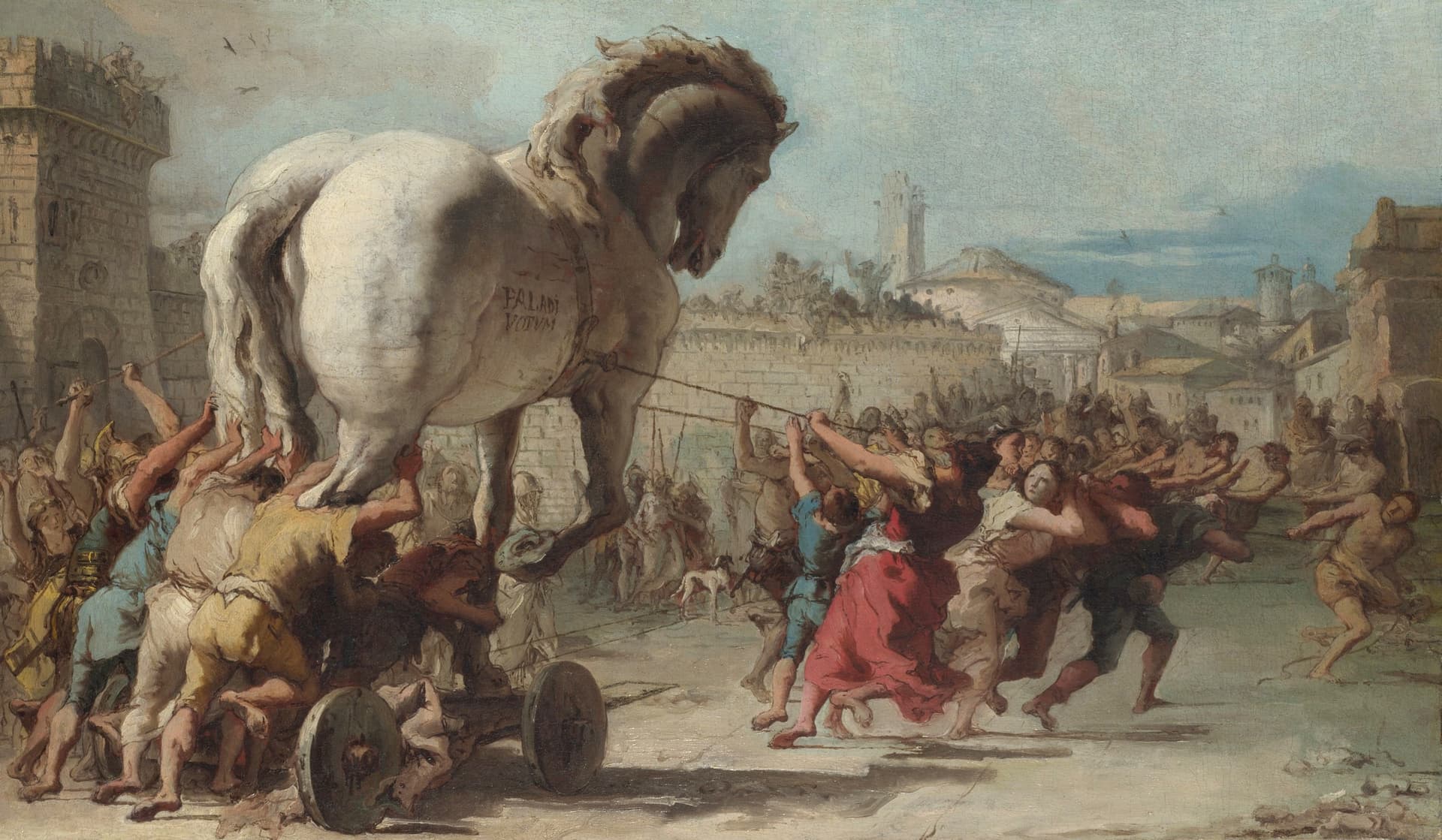
Machines don't usually notice they're being tested. What happens once they start modeling the box itself—and is an industry investigating itself even the right body to watch?

Deep Unlearning
Machines have spent the last decade getting radically better at learning. Between PISA's falling scores and the Fields Medallists' warning about mathematics itself, have we spent it quietly getting worse at learning ourselves?

Force Majeure
Workforce, Salesforce, Agentforce, Claudeforce—the word kept sliding, and it turns out to be physics' word for gravity too.

Hugged, Not Bought
Nvidia just acquired Hugging Face 🤗. The strategic prize is less and less about owning all the compute. It may be rather owning the place where compute, cloud or edge, gets discovered, evaluated, and chosen.
Same Old Song
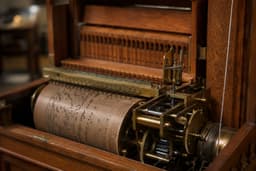
Every generation gets a publisher suing the machine that challenged its monopoly. The case Sony and Warner just filed against Anthropic could be the latest verse.

Assemble the Components. Make the Builders.
Le 'make' qui marche n'a jamais consisté à tout reconstruire, mais à maîtriser l'assemblage — composer avec des caractères déjà fondus, dans une grammaire qu'on peut toujours refaire.

Low-Background Corpus
Steel forged before 1945 is prized for its purity. A new paper suggests something similar may be happening to language—not contaminated, but quietly narrowed toward an attractor, one polished paragraph at a time.
Anatomy of a Workhorse
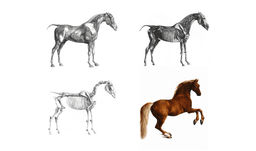
The harness stops being a fixed exoskeleton and starts remodeling itself, slightly, at the model's own initiative. Not just a bigger muscle—a more articulated skeleton.

Retrofit
GitHub's own first users are leaving. Two challengers just launched at once. The real question isn't whether Origin beats GitHub—it's whether GitHub's assumptions still hold.

The Equation Before the Theory
Plot loss against compute for models that share almost nothing, and the same power law shows up every time. That's a stranger fact than whether scaling has a ceiling.

Twelve Bodies, One Build
I forked a browser agent, tore out its cloud brain, and transplanted a local model that runs entirely offline on the machine's own GPU. What broke taught me more than what worked.

Backtracing
The strangest thing about the current race for AI supremacy is that it's more and more running backwards—after Fermat, now Navier-Stokes.

Recurrent Depth
What Fermat teaches us, and a dive into the abyss of mathematical abstraction.

Machinaverse
The Metaverse didn't fail because of the headset. It may have built the right kind of world for the wrong kind of inhabitant.

Balance-Sheet-as-a-Service?
Every major relationship in AI right now looks the same: each side uses the other to get through an exponential capex phase, while quietly building the option not to need it later.

Harness in the Field
Two things happened the same week, and together they may say something real about local AI. A second signal, an idle-Mac inference network, points toward something more interesting: compute distributed rather than centralized.

Murailles intérieures
Babel bâtit une tour sans jamais dire qui l'habite. Néhémie répare une muraille, famille par famille. Au milieu du chantier technologique de notre époque, le second nous invite à préserver tout autant nos murailles intérieures.


The Engine Was Ready. The Infrastructure Wasn't.
The harness is the charging network. Without it, agent autonomy isn't viable—no matter how powerful the model behind it.
New pieces, infrequently. Subscribe.