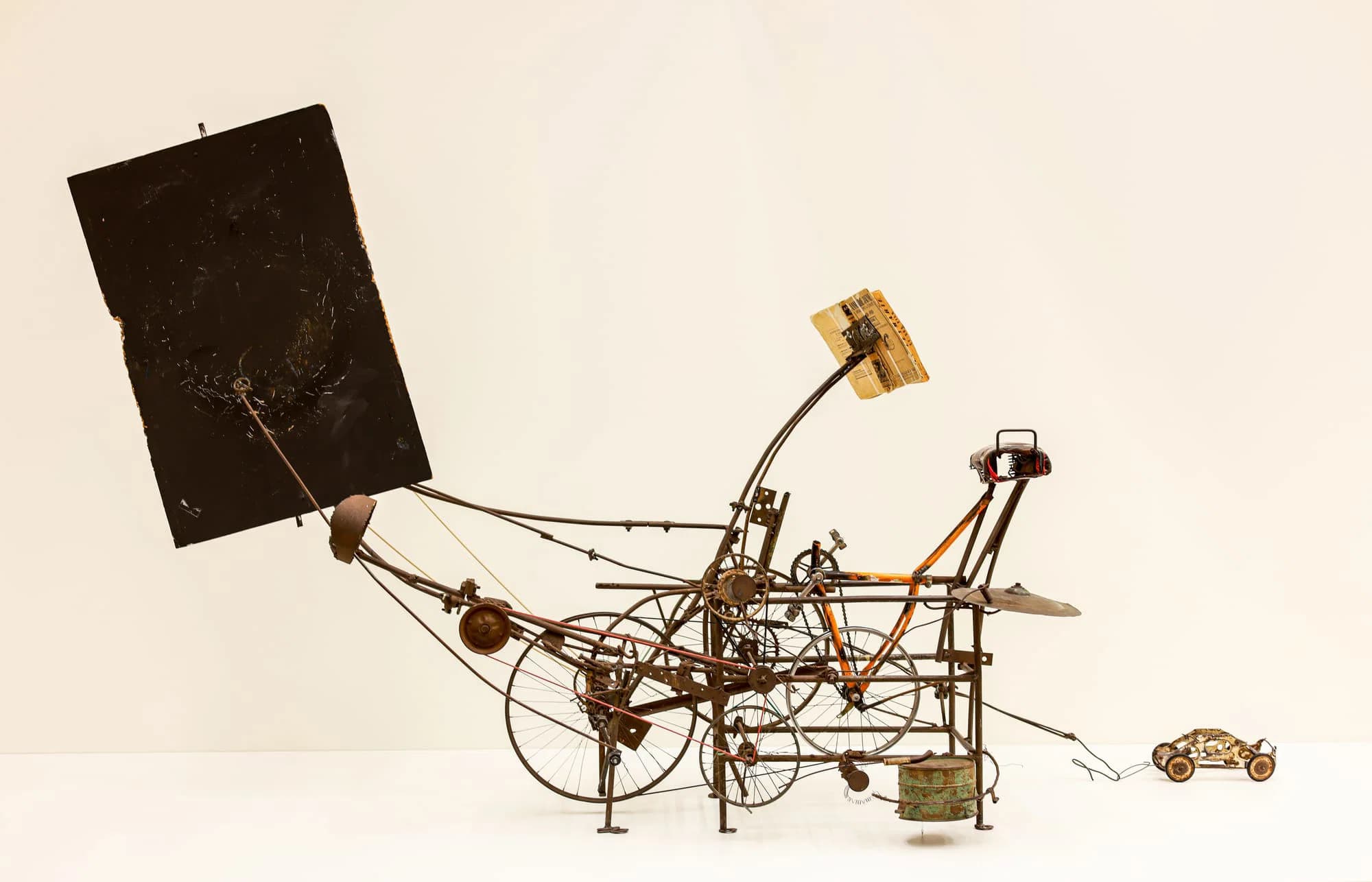
Jean Tinguely, Cyclograveur (1960) — A workbench in motion.
Workbench
n.—not where you launch tools. Where you leave intent running.
Etymology is useful here. Bancus, bench—from the same root as "bank," the bench where money-changers sat. A workbench is a surface designed for production: wide enough to hold several things at once, stable enough to take force, organized to keep what's in-progress visible without being in the way.
The word migrated to software the way most physical metaphors do: as a container for tools. A developer workbench, a data workbench—mostly just an IDE or a dashboard with a specific audience in mind. The metaphor worked because what it captured was less about the tools than the surface: a persistent place where things-in-progress could stay visible without being completed.
Something is changing that makes the workbench worth naming again. The first generation of cloud productivity—documents, spreadsheets, presentations, eventually augmented by AI—transposed a physical office into a browser. The new generation is doing something harder to name. It's dissolving the fixed relationship between an intention and the application that receives it. You state what you want; the workbench holds that intent, coordinates the tools and agents needed to pursue it, and keeps the work running while you look elsewhere. The application is no longer the entry point. The workbench is.
The word "anti-app" I keep reaching for doesn't mean applications go away—it means the orientation reverses. An application is something you attach yourself to, specialized for one use case, waiting for you to arrive. A workbench is something that travels with intent: calling tools as needed, persisting across sessions, surfacing for judgment rather than demanding it continuously. The workbench is the operating layer that traverses the applications, not the other way around.