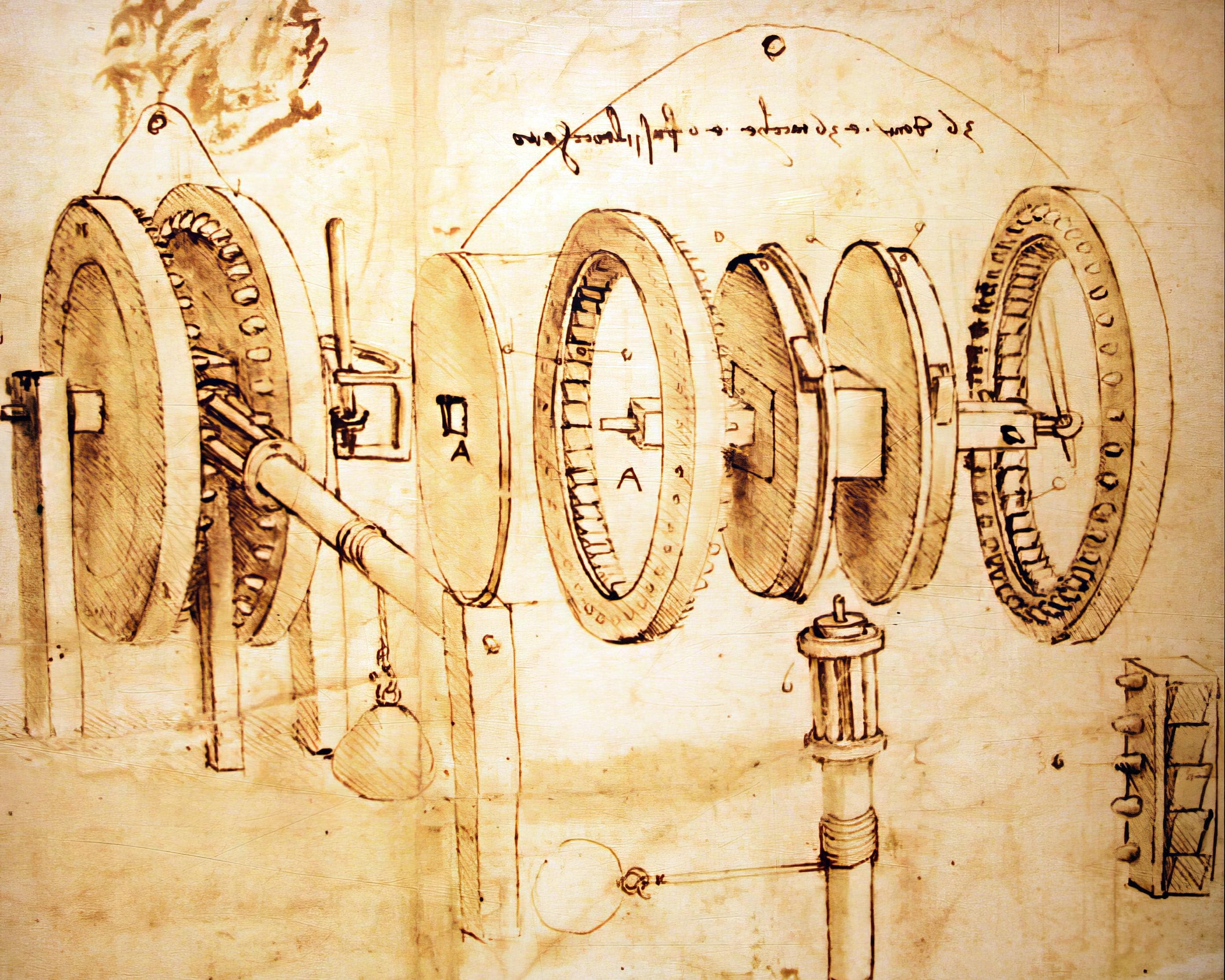
Leonardo da Vinci, machine studies — Thinking with the hand before the machine exists.
Craft
n.—made by hand, in the oldest sense of the word.
Artificial does not mean magical. It means made by our hands, crafted with art—arti-fex, the one who makes with skill. I keep returning to that etymology because it cuts against the grain of how the word gets used now: "artificial" as the opposite of real, of earned, of made-by-someone. The Latin says the opposite. It says: this thing exists because a hand shaped it.
Craft, in the sense I mean it, is not an aesthetic preference for the handmade over the automated. It's a claim about where understanding actually comes from. Sennett's craftsman: the dialogue between head and hand, where you only really learn something by having your hands on the material when it resists you. A consultant's slide about someone else's friction teaches you nothing. Your own friction, today, with the thing in front of you—that's the only learning that really stays.
This is why I'm suspicious of any transformation that doesn't ask the most senior people in the room to also do the work, not just approve the budget for it. The craft has to be practiced, not delegated. The moment it's delegated, you stop being able to tell good work from a good slide describing work.
AI changes the tools. It does not change this. If anything, it raises the price of not understanding your own material, because the gap between "looks done" and "is done" gets easier to paper over, not harder.