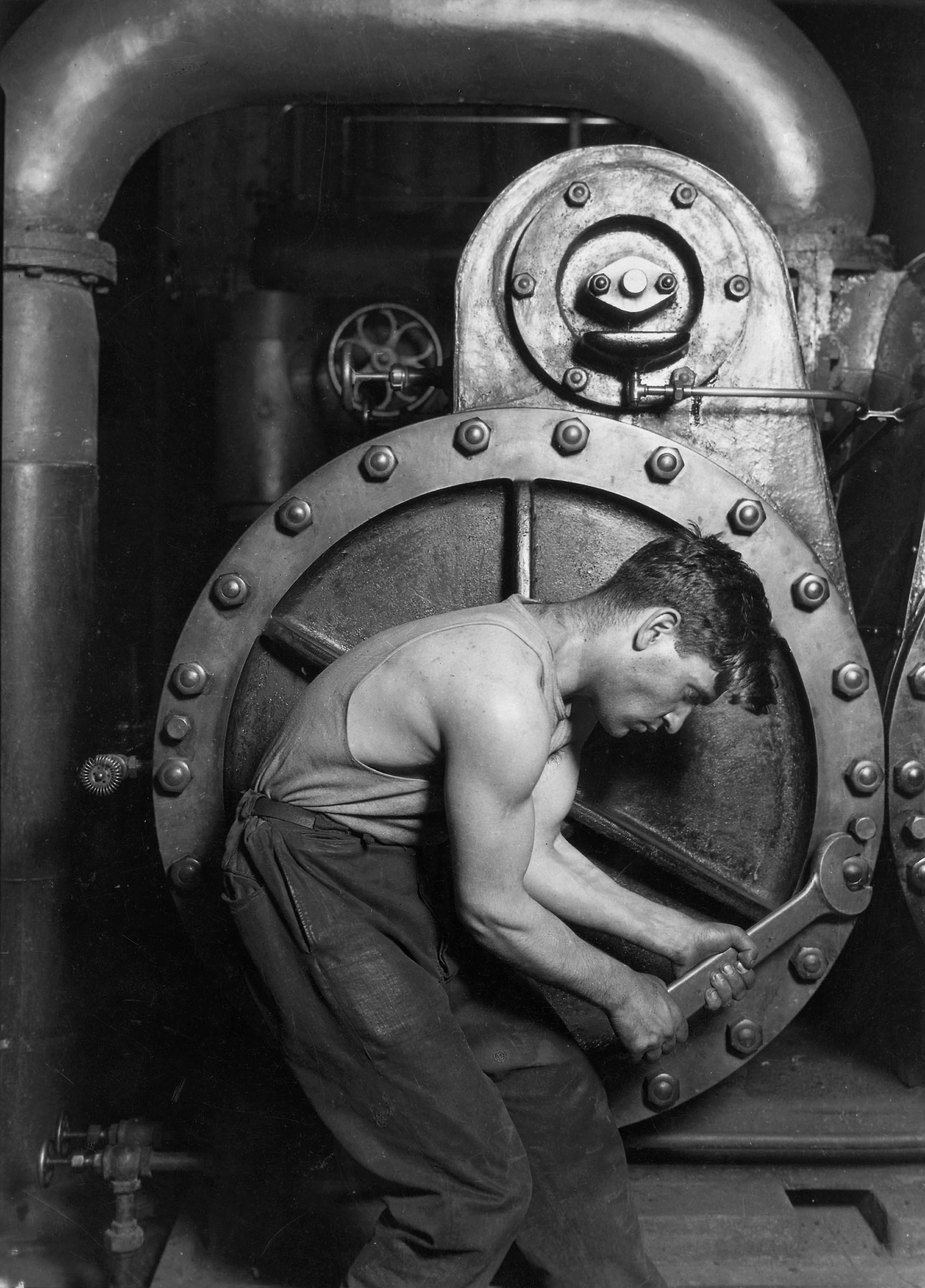
Lewis Hine, Power House Mechanic Working on Steam Pump (1920) — The machine got bigger. The hand stayed load-bearing.
Manufacture
n.—the hand the machine never quite replaces.
Manufacture is a word that kept an old meaning after reality had changed. Manu factura—made by hand. By the time the word meant what it means today, almost nothing about the thing it described was made by hand anymore. The word kept the etymology as a trace of what the activity used to be before it became something else entirely.
I belong to an organization that still keeps the word proudly on its pediment: the Manufacture Michelin. It does not feel like a historical ornament. It keeps the hand, the material, and industrial scale inside the same name—a useful reminder that technological progress does not have to erase the lineage of making.
I find that trace useful. Not as nostalgia—I have no interest in pretending the hand should have stayed in charge—but as a question worth re-asking every time a new wave of automation shows up promising to finish the job the first wave started: what, exactly, does the hand still do here that nothing else can?
In software, I think the honest answer used to be: judgment, mostly. Knowing which corner not to cut, which bug is actually a symptom, which shortcut will cost more later than it saves now. The interesting question raised by AI-assisted engineering is whether that judgment can now be produced at scale—automatable, copy-able. I don't think it fully can, yet. But I notice that I used to be certain it couldn't be, and I'm less certain now.
Code is a material the same way thread or steel is a material—it resists, it has properties, it punishes carelessness in ways that only show up later. Manufacture, in that sense, never really stopped being the right word. We just stopped noticing the hand that was still there.