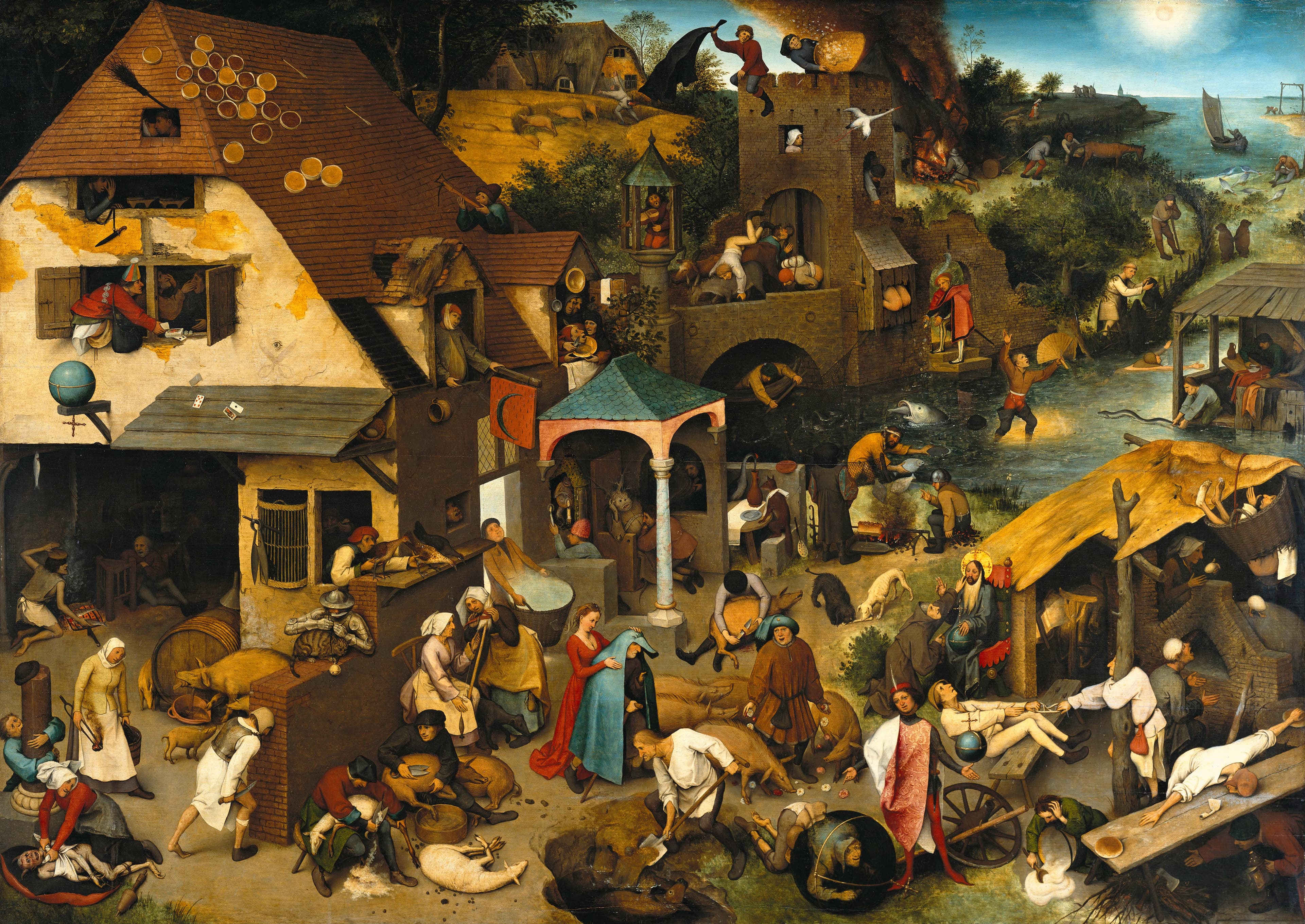
Pieter Bruegel the Elder, Netherlandish Proverbs (1559) — Every figure follows a rule. Together, they make a world.
Ecosystem
n.—the house everyone lives in and no one owns.
Eco- comes from oikos, the Greek word for house or household—the same root that gives us economy, the management of the house. An ecosystem, etymologically, is not a marketplace and not a network. It's a house, with everyone in it, whether they chose the others in it or not.
I notice how often "ecosystem" gets used in tech as a synonym for "market"—a polite word for a system of customers, partners, and competitors locked in mutual dependence and mutual extraction. That's not wrong, exactly, but it drops the part of the word that matters most: a house is where you actually live, not just where you transact. You can't extract everything from your own house and expect to keep living in it.
This is the real argument for treating open source as a commons rather than a free input. The open web, the libraries, the documentation, the Stack Overflow threads that trained today's models—that's the house. When something consumes far more than it contributes back, it isn't gaining a competitive edge over the ecosystem. It's weakening the shared base it depends on and calling it efficiency.
The healthiest organizations I've seen treat their technical ecosystem the way you'd treat an actual household: contribute to the parts you use, repair what you break, and accept that some maintenance work has no other reward than the house still standing next year.