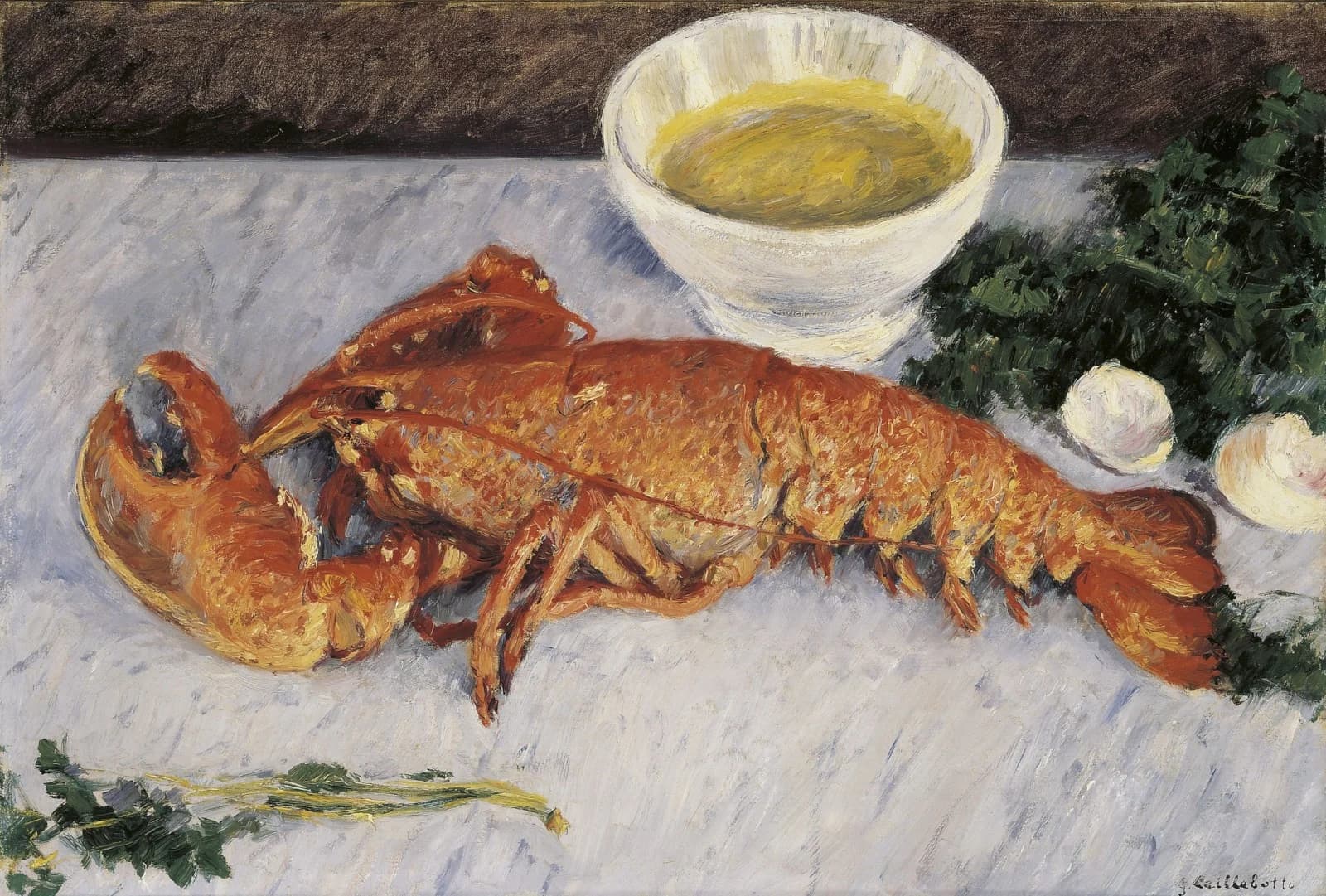
Gustave Caillebotte, Still Life with Lobster (1883) — The name keeps molting. The claw never does.
Claw
n.—proof that history's biggest accidents rename themselves as they go.
Before it was OpenClaw, the project was Clawdbot—a fairly transparent pun on Claude. Anthropic asked the creator to rename it to avoid trademark issues, and for a few days it became Moltbot, after the way a lobster sheds its shell to grow—a decent metaphor for permanent evolution that never quite caught on with the community. A few days later it settled on OpenClaw: open for open source, claw for the crustacean identity the community had already adopted as a meme before the project even had a stable name.
What strikes me about that sequence—from Claude, to Clawd, to Clawdbot, to Moltbot, to OpenClaw—is that the lobster was never a strategic choice. Nobody set out to build a brand around a sea creature. The wordplay came first, the community ran with the joke, and by the time a real name was needed, the identity had already formed itself without anyone designing it.
That's the more interesting story than the technology itself, and it's also the more honest one. The project's rapid rise—a weekend build from one developer becoming, within weeks, one of the most consequential acquisitions of the year—wasn't a trajectory anyone planned either. Some of history's biggest pivots start like this: with a pun that keeps renaming itself until the rename matches what it has already become.