I wonder if we are witnessing the end of the 'Pax Digitalis' that has prevailed on the Web for the last twenty years.
I notice two signals of a very different nature, although they actually seem to me to be correlated.
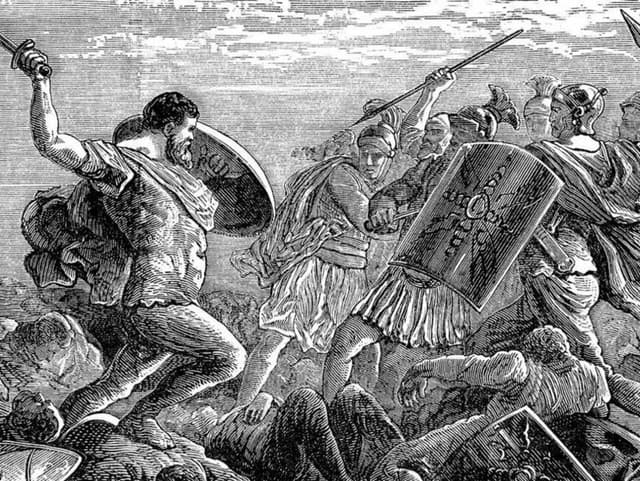
The first is about the security of the Web. Nothing entirely new, but major flaws and their exploitation now follow one another at a relentless pace, on a Web that still rests largely on open, widely democratized technologies. Their security relied on a tacit contract. As Rome did within its borders, the large tech groups acted as guarantors of the ecosystem: they maintained major components themselves—such as Angular or V8, the engine under Node.js—they financed others through foundations (e.g. the Linux Foundation) and they operated the roads—browsers, clouds, platforms. A village without walls can live in peace as long as the empire keeps order. Today the roads of the Web are growing less safe, which suggests that the guarantee is weakening, and the problem begins when the empire itself is no longer secure.
The second signal is the recent fall of Google's stock—13% in a single day. Google remains an extremely solid giant, with Search queries growing at their fastest pace in five years, yet the market may be showing the first doubts about the durability of its dominant economic model.
The common root, I suspect, is the openness that made the Web. Open source and open content are its founding elements, and in the age of agents they also feed the models, and the threats, that may erode its traditional model.
Rome offers an uncomfortable comparison. It grew by assimilating what lay outside its borders, and some of those who later challenged it came from its own ranks—like Alaric, a Gothic chief who had served in the Roman army before sacking the city in 410. The Web also grew by assimilating what anyone chose to publish.
Google illustrates this irony, perhaps a triple one. Attention Is All You Need, the paper that introduced the Transformer, came from Google researchers. ChatGPT and the other LLMs were trained largely on what the Web had published. And agents trained on public code may, in the wrong hands, become vectors of insecurity at the scale of the Web.
The comparison calls for prudence. The Pax Romana ended well before the Empire did, and the Eastern half lasted nearly a thousand years more. The large platforms may well outlast the Pax Digitalis—transformed—while the order that made them what they are comes to an end.
In the end, the question I ask myself is who will pay for the next order. Rome bought its own with the taxes of its provinces and, later, with gold paid at its frontiers. The Web's was bought with the rent of its intermediaries and the sponsorship of its large groups. If that rent erodes while the roads grow less safe, who will pay?