I remember reading, a while back, about "low-background steel"—steel forged before 1945, before the first nuclear tests spread radioactive traces that now show up, in tiny amounts, in every ounce of steel produced since. Instrument makers who need extremely sensitive radiation detectors still go looking for pre-1945 steel, salvaged from places like Scapa Flow, where a scuttled German fleet has been sitting since 1919. John Graham-Cumming, Cloudflare's CTO, gave the idea a second life in 2023: a project called Low-background Steel, cataloguing web content and archives from before generative AI went mainstream—Wikipedia's August 2022 snapshot, Project Gutenberg, GitHub's Arctic Code Vault—on the same logic. Before a certain date, we know for certain nothing here was written, polished, or rephrased by a machine.
A paper recently published in 'Nature' gives that intuition something to measure. Researchers had large language models simply reformulate ordinary human text—fix the grammar, tighten the syntax—and measured what happened to it. The meaning survived almost perfectly. The variance didn't: across every dataset and model tested, the range of how differently people write—word choice, rhythm, structure, the small irregularities that make a paragraph recognizably someone's—contracted significantly, toward a narrower band, again and again.
This isn't quite the model collapse we've already been warned about—i.e. models trained on their own synthetic output, degrading generation after generation. This is something quieter, and arguably more insidious: authentically human text, written by a real person, already smoothed by a machine before it ever reaches the page. Multiply that by every email, essay and post "polished" before publishing, and it's not hard to extrapolate—carefully, this is a guess, not a measured fact—a recursive version of the same problem: today's slightly flattened corpus becomes tomorrow's training data, shaping models that flatten the next round a little further.
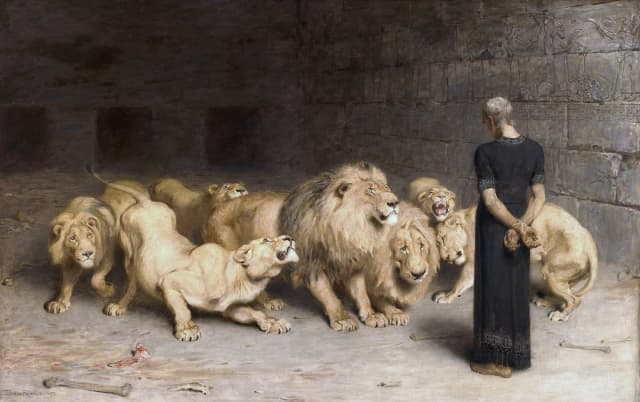
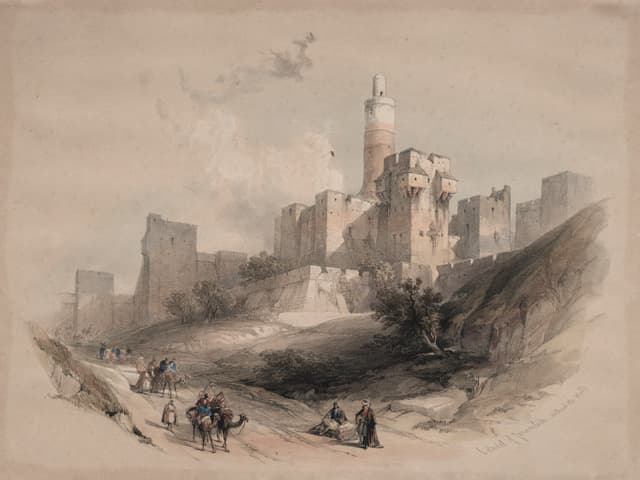
I've had occasion to write, recently, about a very old text that draws almost exactly this distinction: the story of Babel, where men make bricks—identical, interchangeable, manufactured—rather than build with stone, received with its own irregularity intact. A brick is a technical improvement over a stone in almost every way. It is also, by definition, the same as every other brick. In his latest encyclical on the anthropological consequences of AI, the pope sets against Babel precisely this counterpoint: Nehemiah's rebuilding of Jerusalem's walls, whose workers pick the burnt stones out of the ruins and put them back, family by family. Babel's rush erodes diversity into confusion. Nehemiah's patience preserves what's already there.
None of this calls for panic. It's less a story about loss than about a threshold. Post-1945 steel isn't bad steel—it's simply steel of a different kind now, which makes the old kind only more valuable for a handful of very specific uses. Something similar seems to be happening with print: this summer, several booksellers reported unusually large, unexplained orders for old, obscure titles—and, over the same stretch, real controversy over books destroyed at industrial scale just to be scanned. I suspect 2022 will end up marking a comparable line for text: not the end of human writing, but the point after which "a person wrote this" stopped being something you could assume by default.
In 1919, the German fleet scuttled itself at Scapa Flow rather than surrender the ships. Over the following decade, salvage crews raised most of them—45 of the 52 that sank, the largest marine salvage operation of its time—for nothing more than the scrap value of the steel. It was only years later, after the first nuclear tests, that what remained on the bottom turned out to hold something nobody had been looking for: steel untouched by the radioactive traces now present everywhere else.
We may be sitting on the linguistic equivalent right now, without quite noticing it: everything written before this threshold, ordinary at the time, quietly becoming a reserve worth protecting.